Saturday, 18 April 2015

Einstein's Enlightenment


John O. Campbell

This is an excerpt from the introduction to a new book titled Einstein's Enlightenment.

Once in a very long time an individual appears who is able to get just about everything right. Shakespeare was like that with his unrivaled understanding of how people work. For the first time in literature he created characters having a rich inner life. Shakespeare’s characters ‘overheard’ themselves and developed a novel type of individuality. That meme went viral around the planet and may have stimulated a new kind of psychological development resulting in our modern sense of self, highly conscious of our role in the world. Indeed the Harvard scholar Harold Bloom claims that by this means Shakespeare invented the modern human (1).

His unrivaled intellectual prowess has left behind a community, largely composed of writers and scholars, standing in reverential awe. A cult of ‘bardolatory’ has arisen around his legacy that regards him as a transcendent genius worthy of worship. This cult became prominent during the eighteenth century and has remained strong ever since. As Wikipedia notes the sect venerates Shakespeare in religious terms (2):
many writers treated Shakespeare's works as a secular equivalent or replacement to the Bible
Little is known however about the contents of Shakespeare’s own thoughts and we have almost no idea of his ideological or religious outlook. All of his great quotes were placed in the mouths of his literary characters. Shakespeare was born in the reign of Elizabeth I and died in the reign of James I. Executions for both heresy and treason were exceedingly common. On Shakespeare’s first arrival in London he crossed London Bridge and would surely have noted the many fresh heads mounted on pikes that lined it. This was a clear message to newcomers that the authorities would not tolerate deviant behaviour.  It was not safe to proclaim either original religious or ideological thoughts, it was much safer to put any such ideas into the mouths of others. 

The potency of Shakespeare’s ‘invention of the human’ was such that soon individuals’ notions of a self who enjoys liberty and autonomy could no longer be contained. Driven by the winds of the enlightenment, only thirty-five years after Shakespeare’s death, the absolutist monarch Charles I had to defend his God given right to rule his subjects in a civil war against his people’s parliament. He lost and was executed. For the first time the monarchy was replaced, albeit for only twelve years, with a Republic. Thus genius, even when confined to literature, may have a profound effect on the evolution of society.

I consider Albert Einstein to be another such prophet, one who wrote copiously on religious and ideological matters as well as on science. I will argue, that similar to Shakespeare, he got just about everything right. Admittedly, this view is in conflict with the consensus view that, especially in his later years, Einstein became muddled and out of step.

His first apparent blunder was with quantum mechanics, which some say he invented, but by the 1930s he was considered the cranky old man of physics, reduced to making guerrilla attacks against the prevailing quantum orthodoxy. Nonetheless as Nobel Laureate Gerard ‘t Hooft argues in his latest research, even here Einstein’s views may yet be vindicated (3):
Our models suggest that Einstein may still have been right, when he objected against the conclusions drawn by Bohr and Heisenberg. It may well be that, at its most basic level, there is no randomness in nature, no fundamentally statistical aspect to the laws of evolution.
He also offered thoughts (which today often elicit eye-rolling) on religion and spirituality. These remained important issues to Einstein throughout his life and he devoted much thought to them. In fact he prophesied the evolution of a new form of religion (4):
The religion of the future will be a cosmic religion.
‘Cosmic’ is exactly the word he meant. As Merriam Webster defines it (5):
·         of or relating to the cosmos, the extraterrestrial vastness, or the universe in contrast to the earth alone

·         of, relating to, or concerned with abstract spiritual or metaphysical ideas 
In other words he prophesied that a new religion based on both scientific and spiritual understanding would arise. To many of us this is precisely the tonic which humanity currently lacks. Religion can unite us as no other force and we sorely need social cohesion to effectively confront the many hurdles which face our species. Success in meeting these challenges will depend largely on science-based solutions. A religion which would unite us in the pursuit of an evidence-based approach would appear to be just what we need.

However in the sixty years since Einstein’s death there appears to have been little progress in this direction. This lack might be attributed to a perceived incompatibility between spirituality and science. Spirituality is most powerful when it is simple and carries an emotional punch as does the image of an all-powerful and caring father figure. On the other hand science is often considered cold and complex. 

Perhaps an even more basic incompatibility is that science is evidence-based while religion is faith-based. The great strength of evidence-based understanding is that it leads to truth in a manner which faith-based understanding cannot. Facts are truths we know to be the case because we have incontrovertible evidence. A basic definition of a scientific explanation may be: ‘the simplest explanation explaining all of the pertinent evidence’. But evidence is our experience of the world and thus science is uniquely positioned to harmonize with the truth conveyed through our experience in the world. Our trust that our own experience, especially sensory experience is the most reliable guide to truth is cliched and reflected in truisms such as ‘seeing is believing’.

Religions whose sacred texts make assertions which conflict with the scientific evidence are in the awkward position of either disputing the evidence and our experience in the world or of adopting the view that their sacred texts describe the world only in a metaphorical sense. For example many Christian sects accept that the biblical description of the creation of the earth is only a metaphor and does not conflict with scientific understanding. On the other hand fundamentalist Christian sects dispute the scientific description of creation and are left in the ridiculous position of claiming that their faith-based interpretation of the scientific evidence is superior to the scientific interpretation.

Unfortunately, even within science truths may not be easy to understand. They are often cloaked in specialist jargon and fractured within disciplines. Although Einstein made many attempts to break through these barriers, to unify and popularize science, he was not able to provide the details of an easily understood cosmic science, perhaps because this ambition was so far ahead of his time and the pertinent scientific concepts were not yet fully available. Still Einstein provided a good deal of guidance in how science and spirituality could be united into his grand vision of religion. This I will call Einstein’s enlightenment. 

What does this enlightenment look like? Einstein claimed it was already in existence during his lifetime, although largely restricted to the small community of scientific researchers (6):
A contemporary has said, not unjustly, that in this materialistic age of ours the serious scientific workers are the only profoundly religious people.
Yet only a tiny proportion of humanity is as familiar with science as are its researchers; the rest of us must struggle to understand even its most basic principles and this experience is hardly ever described as a spiritual one. Perhaps now is the time for researchers to give some thought to their spiritual view of science and how it might be communicated to a wide audience. Hopefully what I am able to offer here is a tentative step in that direction and is meant to stimulate those more capable of carrying this project forward.

Some of the many scientific understandings developed since Einstein may promise progress. Central to many of these has been the concept of information. Although the scientific description of information was only introduced shortly before Einstein’s death, information is now fundamental to scientific explanations of most phenomena and within physics many consider it even more basic than mass or energy.

A second pertinent path of scientific development has been the explosion of Darwinian theories used to explain phenomena throughout science. The third and last development I will use to construct a candidate ‘cosmic science’ is the rebirth and development of Bayesian probability theory. Loosely, Bayesian theory describes how knowledge can be accumulated from information.

I have described the relationship between these three branches of scientific understanding in previous writings (7; 8; 9) but fear these often became bogged down in detailed arguments which tended to obscure their revelatory conclusion.

That conclusion is that knowledge is essential to the creation of all complex entities and that knowledge may only be accumulated through Darwinian processes operating according to Bayesian principles. This message may be summarized in three points which hopefully have some spiritual import:

1)      Knowledge is the creator and essence of all things

2)     There is but one universal source of knowledge

3)     Humans were created from this universal source and are the highest form of knowledge yet found in the universe

The scientific support for these three points is broadly:

1)      Without knowledge to locally overcome the second law of thermodynamics complex entities dissipate and cease to exist. Given their relationship to the Planck scale which underlies physics, all entities studied by science are complex entities.

2)     Darwinian processes are the unique method used by nature to accumulate the knowledge necessary for existence. As the physicist Lee Smolin has written (10): 
There is only one mode of explanation I know of, developed by science, to explain why a system has parameters that lead to much more complexity than typical values of those parameters. This is natural selection.
3)     In addition to the complexities of biology and nervous systems that we share with many other species, humans uniquely, as far as we know, also participate in an additional level of complexity associated with cultural evolution.

Such a concise unification of science and spirituality may be what is required to make Einstein’s Enlightenment accessible to greater numbers.  Later I will develop this scientific framework to explain the universal reach of these three principles. However my greatest hope is that others may offer a more compelling vision of Einstein’s Enlightenment.

 To be clear, I am using ‘enlightenment’ in a very strong sense similar to the state which Buddha experienced and claimed as the true understanding of reality. In several of his writing Einstein describes his subjective experience, for instance in a 1939 letter to the Queen Mother of Belgium (10):

Still, there are moments when one feels free from one's own identification with human limitations and inadequacies. At such moments, one imagines that one stands on some spot of a small planet, gazing in amazement at the cold yet profoundly moving beauty of the eternal, the unfathomable: life and death flow into one, and there is neither evolution nor destiny; only being.
Although Einstein beautifully describes this experience he does not provide any supporting scientific understanding. Perhaps he was thinking of his theory of general relativity whose solutions describe the entire history of the universe as a timeless entity. However we can conjecture that it is his general feelings of beauty and awe concerning scientific understanding and not the details which support his insight. Fortunately since his time a great deal of research has resulted in new knowledge that provides greater clarity.

My own depiction of this vision describes an all-knowing, all-powerful creator permeating reality and describes ourselves as the ‘highest’ or at least the most complex of its known creations. However this creator is not a God in our own image, rather it is a creative process well known to science; it is the Darwinian process.

A largely unnoticed scientific revolution has occurred over the past fifty years. It is not a revolution that occurred in a single branch of science but one that has swept across many fields of science. The Darwinian process has been used to scientifically explain the creation and evolution of most levels of reality including: the cosmos (10), quantum physics (11), biology (12), neuroscience (13) and culture (14). 

Darwinian processes, a generalization of natural selection (which is at the heart of each of these theories), were described by Richard Dawkins in terms of replicators and vehicles (15). In the familiar biological context replicators are genes and vehicles are organisms. Replicators record knowledge of successful strategies for reproductive success, knowledge which is accumulated over evolutionary time from information gathered through the experience of the vehicles in their environments. A vast array of scientific theories claim that this basic process of knowledge accumulation is responsible for the creation of most of the complex entities in the universe.

Mathematically it has been shown that the optimum method of accumulating knowledge from information is the process of Bayesian inference (16). I have argued that at their core, Darwinian process are physical implementations of the mathematics of Bayesian inference (8; 7).

The basic process involved may be paraphrased as ‘learning from experience or from the evidence’. This principle is also at the heart of the scientific method. Indeed Bayesian inference has been called ‘the logic of science’ (16) and many philosophers of science have described science itself as a Darwinian process (17; 18; 19). I have made the claim that not only science but all methods of knowledge accumulation found in nature operate according to this single principle (8).

Hopefully this brief synopsis and references to the science underlying our three proposed spiritual principles are sufficient to allow the interested reader to investigate and come to their own conclusions. However I think it is safe to say that these spiritual principals are unlike almost any others in that they are firmly based in scientific understanding.

Einstein came to the religion of Science through traditional Christianity.  Although his parents were non-practicing Jews they felt that a Christian education would benefit their son and enrolled Albert in a state Catholic school. As Wikipedia describes it (20):
The only Jewish school in Munich had been closed in 1872 for want of students, and in the absence of an alternative Einstein attended a Catholic elementary school. He also received Jewish religious education at home, but he did not see a division between the two faiths, as he perceived the "sameness of all religions." Einstein was equally impressed by the stories of the Hebrew Bible and the Passion of Jesus. According to biographer Walter Isaacson, Einstein immensely enjoyed the Catholic religion courses which he received at the school.
Einstein described this early infatuation as a (21) ‘religious paradise’ which freed him from ‘the chains of the merely personal, from an existence dominated by wishes, hopes, and primitive feelings’. Disappointingly this phase of his spiritual development came to an abrupt end at age twelve when he began reading works of popular science and realized that much of what was written in the bible could not be true.

The young Einstein reacted violently to what seemed to him a cruel intellectual deception on the part of the state and church (21):
the impression that youth is intentionally being deceived by the state through lies; it was a crushing impression. Mistrust of every kind of authority grew out of this experience, a skeptical attitude toward the convictions that were alive in any specific social environment—an attitude that has never again left me
He never again believed in theistic religion but he did not abandon his sense of awe and wonder of a world beyond that of mundane everyday life. He came to discover that the religious experience of awe and wonder could be realized through the practice of creative scientific research (21):
Out yonder there was this huge world, which exists independently of us human beings and which stands before us like a great, eternal riddle, at least partially accessible to our inspection and thinking. The contemplation of this world beckoned as a liberation, and I soon noticed that many a man whom I had learned to esteem and to admire had found inner freedom and security in its pursuit. The mental grasp of this extra-personal world within the frame of our capabilities presented itself to my mind, half consciously, half unconsciously, as a supreme goal.
 His passion for experiencing this wondrous cosmic world led him to the religion of science and Spinoza. Here the emotional impact of religion was united with the truth of science. The practitioners of science sought after truth and did not seek to lure converts through deception. Einstein came to understand that the community of scientific researchers had a type of cosmic religious motivation for their work (6):
What a deep conviction of the rationality of the universe and what a yearning to understand. Were it but a feeble reflection of the mind revealed in this world, Kepler and Newton must have had to enable themselves to spend years of solitary labor in disentangling the principles of celestial mechanics! Those whose acquaintance with scientific research is derived chiefly from its practical results easily develop a completely false notion of the mentality of the men who, surrounded by a skeptical world, have shown the way to kindred spirits scattered wide through the world and through the centuries. Only one who has devoted his life to similar ends can have a vivid realization of what has inspired these men and given them the strength to remain true to their purpose in spite of countless failures. It is the cosmic religious feeling that gives a man such strength.
Thus Einstein settled on the community of creative scientific researchers as his spiritual home, those who share ‘a deep conviction of the rationality of the universe’. This group used the rationality of science to discover a universe which is also rational. Einstein marveled at the similarity between what science reveals concerning the nature of the universe and science itself (6) :
the sublimity and marvelous order which reveal themselves both in nature and in the world of thought
Specific examples of this understanding that science is a manifestation of a common process of knowledge accumulation used throughout nature has been recorded in the recent literature. For instance Karl Friston describes brains as accumulating knowledge in a surprising similar manner to science itself (22):
Our capacity to construct conceptual and mathematical models is central to scientific explanations of the world around us. Neuroscience is unique because it entails models of this model making procedure itself. There is something quite remarkable about the fact that our inferences about the world, both perceptual and scientific, can be applied to the very process of making those inferences: Many people now regard the brain as an inference machine that conforms to the same principles that govern the interrogation of scientific data.
More generally science, mental models, biology, quantum physics and cosmology have all been described as Darwinian processes which seems to be nature’s exclusive method of knowledge accumulation. Thus Einstein was correct to see a cosmic relationship between science and nature. It is this method of knowledge accumulation operating over cosmic time which created us and we remain at the cutting edge of the further evolution of the universe through our continued practice of this ancient tradition.


Scientific understanding evolves as a Darwinian process and Darwinian processes are the timeless creative force employed by the universe; science is but a recent manifestation of the primal cosmic creator. In the spirit of Spinoza we can confidently say that science is an expression of the one true God.

Bibliography

1. Shakespeare: The Invention of the Human. Bloom, Harold. s.l. : Riverhead Books, 1999.
2. Wikipedia. Bardolatory. Wikipedia. [Online] http://en.wikipedia.org/wiki/Bardolatry.
3. The Cellular Automaton Interpretation of Quantum Mechanics. 't Hooft, Garard. s.l. : Arxiv preprint, 2014, Vol. http://arxiv.org/abs/1405.1548.
4. Einstein, Albert. Quote. [book auth.] Jon Garth Murray. All the Questions You Ever Wanted to Ask American Atheists. 1982, Vols. vol. ii., p. 29.
5. Merriam-Webster. Cosmic. Merriam-Webster. [Online] [Cited: March 23, 2015.] http://www.merriam-webster.com/dictionary/cosmic.
6. Einstein, Albert. Religion and Science. s.l. : New York Times magazine, http://www.sacred-texts.com/aor/einstein/einsci.htm, 1930.
7. Bayesian Methods and Universal Darwinism. Campbell, John O. s.l. : http://arxiv.org/abs/1001.0068, 2009. AIP Conf. Proc. 1193, 40 (2009), DOI:10.1063/1.3275642. pp. 40-47.
8. Campbell, John O. Darwin does physics. s.l. : CreateSpace, 2015.
9. —. Universal Darwinism: The path of knowledge. s.l. : CreateSpace, 2011.
10. The case for background independece. Smolin, Lee. s.l. : http://arxiv.org/abs/hep-th/0507235, 2005, arXiv:hep-th/0507235v1.
11. Einstein, Albert. letter to Queen Mother Elisabeth of Belgium. January 9, 1939.
12. Did the universe evolve? Smolin, Lee. s.l. : http://www.universaldarwinism.com/documents/smolin-did-the-universe-evolve.pdf, 1992, Classical and quantum gravity, pp. 173-191.
13. Quantum Darwinism. Zurek, Wojciech H. s.l. : http://www.nature.com/nphys/journal/v5/n3/abs/nphys1202.html, 2009, Nature Physics, vol. 5, pp. 181-188.
14. Darwin, Charles. The Origin of Species. sixth edition. New York : The New American Library - 1958, 1872. pp. 391 -392.
15. Selectionist and evolutionary approaches to brain function: a critical appraisal. Fernando, Chrisantha, Szathmary, Eros and Husbands, Phil. s.l. : http://www.sussex.ac.uk/Users/philh/pubs/fncom-Fernandoetal2012.pdf, 2012, Computational Neuroscience.
16. A framework for the unification of the behavioral sciences. Gintis, Herbert. s.l. : http://www2.econ.iastate.edu/tesfatsi/FrameworkForUnificationOfBehavioralSciences.HGintis2007.pdf, 2007, BEHAVIORAL AND BRAIN SCIENCES.
17. Dawkins, Richard. Replicators and Vehicles. [book auth.] R. M. Burian and N. R. Brandon. Genes, Organisms, Populations. s.l. : Massachusetts Institute of Technology Press, http://richarddawkins.net/file/2014/06/Replicators-and-Vehicles.pdf, 1982, pp. 161-179.
18. Jaynes, Edwin T. Probability Theory: The Logic of Science. s.l. : University of Cambridge Press, 2003.
19. Campbell, Donald T. Evolutionary Epistemology. [book auth.] P. A. Schilpp. In The philosophy of Karl R. Popper. s.l. : Open Court., 1974, pp. 412-463.
20. Popper, Karl. Objective Knowledge. s.l. : Claredon Press, 1972.
21. Hull, David L. Science as a Process: An Evolutionary Account of the Social and Conceptual Development of Science. Chicago and London : The University of Chicago Press, 1988.
22. Wikipedia. Religious View of Albert Einstein. Wikipedia. [Online] [Cited: April 9, 2015.] http://en.wikipedia.org/wiki/Religious_views_of_Albert_Einstein.
23. Einstein, Albert. Albert Einstein: Autobiographical Notes. [book auth.] Paul Auther Schilpp. Albert Einstein: Philosopher-Scientist. s.l. : Cambridge University Press, 1949.
24. Free Energy and the brain. Friston, Karl and Klass, Stephan. 2007, Synthese, 159, pp. 417-458.

Monday, 2 March 2015

The Singular Universe and the Reality of Time – A review


John O. Campbell

Physicist and Philosopher Lee Smolin and Philosopher Roberto Mangabeira Unger have teamed up to produce their long awaited book The Singular Universe and the Reality of Time: A proposal in natural Philosophy
 
Throughout his career Smolin has injected novel ideas and principals into scientific descriptions of the universe. His 1992 paper (1), Does the universe evolve?, for the first time, offered a Darwinian process as an explanation in a fundamental physical theory. This paper was followed in 1998 by his book, Life of the Cosmos (2), which further develops and describes his Darwinian theory. He calls it Cosmological Natural Selection (CNS) and uses it to explain why our universe is a ‘Goldilocks universe’, just right for the existence of complex structures like galaxies, stars and chemistry. 

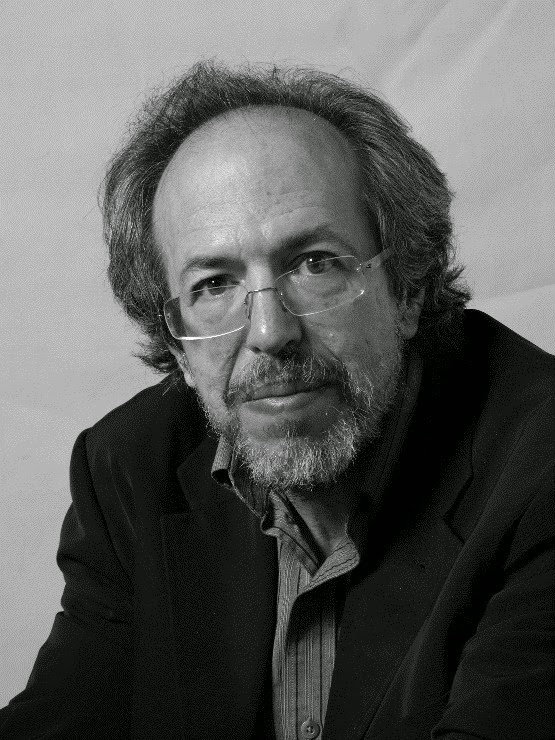
 Figure 1: Lee Smolin

He uses an analogy to natural selection in explaining that our universe is one in a long line of universes which evolved over cosmological time. What appears as the formation of a black hole in a parent universe is actually a disconnected child universe starting off in its own Big Bang.  With the bounce of a black hole into a child universe the laws and parameters of the parent universe are inherited by the child with slight variations. Over evolutionary time this Darwinian process has selected universes with ‘just right’ laws and parameters for fecundity in their production of black holes. Black hole fecundity relies on the existence of galaxies, stars and complex chemistry. Therefore our universe has evolved to its ‘Goldilocks’ state in order to achieve reproductive success in the production of black holes.

This theory does not provide much centrality for Homo sapiens. Our existence, and the existence of life, is merely made more plausible. It is not a full explanation of life, it only explains the existence of a cosmological context necessary for the evolution of life.  Smolin is content to leave life’s fuller explanation to Darwin’s theory of natural selection. 

It is perhaps of even greater importance that CNS marked a milestone in the largely unnoticed scientific revolution of universal Darwinism. Since Darwin’s time his theory had become ever more central to biology as its molecular details came into focus. Philosophers of science such as Donald Campbell and Karl Popper had since the 1970s described science itself as a Darwinian process which accumulates knowledge. In 1976 Richard Dawkins, in his book The Selfish Gene, speculated that there was a cultural replicator he coined the ‘meme’ which might be at the basis of all forms of cultural evolution. Today practically every field of the social science has a school bearing the ‘evolutionary’ prefix in its title: evolutionary psychology, evolutionary linguistics, evolutionary economics etc. In 1987 the Nobel Laureate Gerald Edelman introduced the Darwinian process to neuroscience where it rapidly spawned a large number of variations. 

Only the physical sciences remained unexplained by Darwinian Theory but with CNS this last gap was beginning to be filled. For those of us with our eye on this particular ball the next obvious question was why; why does nature repeatedly use this single mechanism to create and evolve so much of reality? Answering this question could possibly provide a unified view of reality which has so far eluded science.

Finding the answer would take a fine scientific mind with great mathematical expertise and a grand vision; it would take someone like Smolin. Surely, now that he had introduced the Darwinian processes to physics, he would take an interest in this larger question.

Since first developing CNS Smolin has spent much of his time at the forefront of the development of Loop Quantum Gravity, a leading contender in the race to find the theory of Quantum Gravity, the holy grail of modern physics.  However one part of Smolin’s creative mind has continued to think about the evolution of the Cosmos. In a number of follow-up papers (3; 4; 5; 6) he summarized the current scientific evidence pro and con his theory and argues for its many advantages over string theory.

Smolin, like Newton and Einstein before him, gives a lot of weight to philosophical guidance. He champions a relational view of physics as pioneered by Gottfried Wilhelm von Leibniz and Charles Sanders Peirce where the physical properties of entities can only be understood in relation to other entities. This view is also central to the epic research program conducted by Julian Barbour on the nature of time (7). 

Much of Smolin’s recent writing features philosophical criticisms of widely held views within the physics community such as the Newtonian paradigm, string theory and the anthropic principle. He believes that physics and cosmology have lost their way and hopes to lead it back to the true path through development of guiding philosophical principles.
Smolin has accepted a faculty position in the philosophy department at the University of Toronto. Since 2006 he has collaborated with the Brazilian philosopher Roberto Mangabeira Unger on a project to develop philosophical principles capable of guiding research in physics and cosmology.

Unger is a polymath who has made important contributions to the law, philosophy, economics, natural philosophy and political science. His influence is practical as well as academic; he was a leader of the movement which brought progressive government to Brazil and was appointed minister of strategic affairs in 2007 and 2015.
His radical political and philosophical outlook are somewhat reminiscent of the counter-culture ideals many of us entertained at one time. He views the present tense of our lives as a creative interface between past and future where the individual’s potential has the capacity to transcend social roles and institutions. 

This notion of the present as the focus of reality also permeates his understanding of natural history where again it is the present which is the forum for the creative unfolding of reality. Philosophically he understands the universe to evolve through the inventive action of the present and thus finds greater explanatory value in becoming than in being.

It is perhaps his view of time which Smolin has found most stimulating. Unger’s view of the universe as an historical process resonates particularly well with Smolin’s CNS. In any case their relationship seems to have greatly energised Smolin.


Figure 2: Roberto Mangabeira Unger
Smolin’s February 2012 paper (5) A perspective on the landscape problem examines the current crisis in physics from a philosophical perspective. He considers Leibniz’s principle of sufficient reason, that there must be a reason that explains why each property of nature is what it is, as a bedrock principle for understanding physics. These reasons are often historical; everything is what it is because it got that way. Smolin’s theory of cosmological natural selection is proposed as a scientific theory that respects the principle of sufficient reason. Smolin also notes that this paper is partially based on his collaboration with Unger concerning the evolving laws of nature.

This joint project drives much of Smolin’s subsequent research. He describes his 2013 book Time Reborn as an introduction to the book he is writing with Unger. He describes his 2013 paper (8) Temporal Naturalism as outlining a project:
This essay is part of a larger project whose aim is to radically reconfigure the practice of science on a cosmological scale to admit three theses: 1) the reality of time, 2) the evolution of laws with respect to that time and 3) the uniqueness of the single causally closed universe that unfolds in time. 
This project was conceived with Unger and its main fruit is their book being reviewed here. For almost three years prior to its publication this project was central to Smolin’s creative output while little was heard from Unger on the subject.

The book is an unusual version of shared authorship as it is actually two books, the first by Unger and the second by Smolin. Each author gives a full account of their individual take on three central ideas: the singularity of the universe, the reality of time and the limited power of mathematics in cosmology. A long concluding chapter lists the many issues on which they disagree and records each of their divergent views on those issues.

The topic of most heartfelt agreement seems to be the reality of time. They share the belief that all of reality changes with the passage of time in a manner that is not fully predictable. For those familiar with Smolin’s body of work there is really very little new here. A natural philosophy which views the universe from an historical perspective has been central to Smolin’s research for over twenty years. CNS is only described in this book as an example of a theory which may fit within their natural philosophy.

Obviously his relationship with Unger has greatly stimulated Smolin and lends support to his view of a historical universe. However I cannot escape concluding that Unger’s philosophy is relatively sterile and serves to blunt Smolin’s great insight that the universe may evolve through Darwinian processes. Unger’s philosophy forms a defensive structure around his notion of the true nature of things; nothing is allowed admittance which does not conform. 

In a section of the book debating their differences Unger goes so far as to reject CNS on the grounds that time changes everything and that there can be no process which itself remains unchanged as he imagines is the case with CNS. 

It is clear, at least within the forum of the cosmos, that Unger is not a great fan of Darwinian explanations. One cannot help but imagine the outcome if Smolin had collaborated instead with a philosopher having greater understanding and sympathy for the Darwinian perspective. I can, for example, imagine Smolin teaming up with Daniel Dennett and the fruitful exploration which may have ensued.
 
Dennett understands the explanatory power of Darwinian processes. Probably his most quoted observation is that Darwin had the best idea ever (9), ‘ahead of Newton, ahead of Einstein, ahead of everybody else’. Certainly ahead of Roberto Mangabeira Unger. In his breakthrough 1995 book Darwin’s Dangerous Idea, Dennett outlines the notion of ‘design space’, a type of mathematical space containing all possible designs: physical, biological and cultural. For example we might conceive of the biological design space as composed of all possible sequences of DNA base pairs. He understands Darwinian processes to be active mechanisms which search through this design space and select those designs which are solutions to the challenges of existence.

Figure 3: Daniel Dennett

This great book was a milestone on the path to Universal Darwinism, the understanding that all complex entities may be created and evolve through the action of Darwinian processes. Dennett understood that both biology and culture could be put under this theoretical umbrella. He even discussed Smolin’s theory of cosmological natural selection as an example of how physical reality may also be included within this paradigm. Dennett has a deep understanding of Darwinian processes and runs with it. Here is someone who might have provided fruitful philosophical mentoring.

A scientific treatment of a design space might consider it in terms of a vast probability distribution where a probability is assigned to the existence of each possibility. The vast majority of designs must have a probability arbitrarily close to zero; most possible designs are not viable solutions to the challenges of existence. Darwinian processes work their way through the space of all possible designs trying out each in turn. Those that can have an existence do have an existence; knowledge of how existence may be achieved is selected and accumulates through an evidence based process.

Evidence based probabilistic models operate according to the mathematics of Bayesian inference which describes how probabilities are reassigned on the reception of new evidence or information. In this view Darwinian processes are physical implementations of the mathematics of Bayesian inference (10; 11; 12). 

If Smolin had arrived at this paradigm via the philosophical stepping stone of Dennett’s insights he would be much better positioned to answer the many conundrums presented by the natural philosophy he has developed with Unger.  

First, their idea that all things change in a creative and unpredictable manner within the present moment of time, may solve the conundrum of the second law of thermodynamics at least when stated in terms of information entropy. In the universal Darwinism paradigm all of the many probabilistic models over design space, including physical reality, biology, culture and even science itself accumulate knowledge through Darwinian processes. This knowledge is an expectation of how to achieve an existence in the entity’s particular environment. New stuff popping into existence in the present moment is unforeseen by these probabilistic models and thus the passage of time tends to increase the ignorance or entropy of all models. 

In this context the second law is obvious: any model becomes less certain as time goes on because there is more new stuff to know. The continued existence of complex entities depends upon gaining knowledge of the current conditions which is the function of Darwinian processes.

In the last part of the book Unger lists his disagreements with Smolin’s published work and Smolin offers a rebuttal. Unger does not shy away from criticizing Smolin’s theory of CNS. He sees it as violating his principle that laws are not constant but change and evolve with their subject matter over time: 
the idea of cosmological natural selection would give a central and permanent role, in the history of the universe, to one mode of change: the one described by Darwin.
In his rebuttal Smolin points out that Darwinian processes are not laws but rather a form of logic and thus share in the timeless nature of mathematics. He is reduced to defending his most brilliant theoretical contribution to his collaborator. If his natural philosophy had evolved instead, under Dennett’s influence, to that of universal Darwinism he could have made much more powerful arguments defending CNS.

A litmus test for Smolin and Unger is that a good scientific theory must explain its laws. This is in contrast and forms a criticism of theories in the Newtonian paradigm which include just about all existing physical and cosmological theories. Theories in the Newtonian paradigm take as given a set of initial conditions and a set of dynamical laws that drive the evolution of those initial conditions through time. The question ‘why these laws?’ is not answerable within this paradigm which cannot therefore provide a complete explanation.

Amongst the most powerful possible explanations of ‘why these laws?’ is a demonstration that the laws are unique in their ability to explain the phenomena in question. Dennett describes such steps in reasoning as ‘forced moves’ such as in a chess game when there is only one move that will stave off defeat. For example, an early hope for string theory, was that a version would be found that was the only mathematically consistent theory of quantum gravity. Unfortunately this did not turn out to be the case with string theory as it has been shown that there are about 10500 consistent versions (5).

However it was proved by Richard Cox in 1946 that Bayesian inference is the uniquely consistent mathematics of probability (13). Any other theory of reasoning from uncertain knowledge must either be inconsistent or wrong. It has further been demonstrated that a reasonable definition of knowledge is contained within Bayesian inference (12). If we view Darwinian processes as physical implementations of Bayesian inference then it is clear that they are the unique method for accumulating this type of knowledge. If we take one further step along the path of universal Darwinism and accept that knowledge is required for the existence of complex entities and is in fact their essence then we are led to conclude that Darwinian processes are the unique method by which complex entities evolve. The last step in this argument is that all entities we know of, even down to quarks and gluons, are vast compared to the fundamental Planck scale and are therefore should also be considered complex entities.

Without the accumulation of knowledge to constrain local entropy production any complex entity will gain entropy and eventually lose its complexity and its integrity as an entity. Thus the question ‘why this law of Darwinian processes?’ can be answered: there is no other possible process by which complex entities can maintain their existence. Accepting this law is a forced move. 

Unger’s view of the historical universe includes the observation that ‘laws evolve with the systems they describe’. This minority view has a long history reaching back to Leibniz and Peirce. It is easily demonstrated by considering that the historical universe consisted, at an early stage, of only a quark/gluon plasma. At this stage there was no atomic physics, biology, cosmology or culture. All of these subject matters as well as the laws describing them came into being as the universe evolved.  Smolin shares this view with Unger’s but adds the insight that Darwinian processes are ‘the general logic making such evolution possible’.

Universal Darwinism might have provided him with a deeper explanation of the evolution of laws. In Dennett’s view Darwinian systems constantly probe design space searching for the good solutions. When good solutions are found they tend to spread and become essential to a wide range of phenomena. These commonly shared design details may be understood as laws (11). In this view scientific laws are merely the design details used in a wide range of solutions. Thus laws evolve with design.

For example with the evolution of sexual reproduction came the mechanism of dominant and recessive genes and the design details that form the law of Mendelian Inheritance. This law is not a timeless principle, it is a good solution discovered by natural selection and came to be used by a large class of organisms. The process is highly contingent and if life is found throughout the cosmos we may expect there will be many instances where this law does not apply. In these cases the Darwinian process which govern the life forms’ evolution may have found other, perhaps better, solutions to the challenges of existence.

Unger appears riled by Smolin’s seemingly innocuous observation that science is our most reliable guide to nature (8):
naturalists also hold that science is the most reliable route to knowledge about nature.
This quote is taken from the paper Temporal Naturalism which Smolin describes as part of his joint project with Unger although Smolin is the sole author of the paper. It may have slipped his mind that Unger is not a scientist and has an ego unlikely to let this kind of imagined slight go by. Unger does not let it go by but writes:
The claim that science is either the sole or even the most reliable source of insight into nature should exercise no influence on the temporal naturalism that we here espouse. There is no hierarchy of forms of inquiry that could entitle one to say that one such form trumps the others.
and
To assert, on behalf of science, a privilege over other sources of insight and experience does science no favor.
Is he having us on here? When he gets sick does he go to someone who has studied medical science for many years or does he go to someone who hasn’t?

These comments smack of post-modernist intellectual relativism where anyone’s views concerning nature are equally as correct as anyone else’s. Yet he presumes to be developing ‘methods and principles adequate to a science of cosmology that is not simply a scaled-up version of contemporary physics’. Why not develop methods and principles for a new astrology, after all cosmological science holds no privilege over astrology? Geez Lee, how could you have teamed up with this?

The superior knowledge of science is proven by its power. For instance scientific knowledge has been used to create the only known instance of atomic fusion outside of a star. From the beginning humans have dreamt of such power to deliver themselves from their enemies. For better or worse, after a history filled with sacrificial rituals, prayer and philosophizing, of all the schemes we humans have devised to bend nature to our will, only science has accumulated the knowledge to deliver on this and so many other dreams.

In my opinion Smolin makes only a lame rebuttal, to the effect that scientists tend to form dedicated communities of truth seekers. Universal Darwinism would provide him with a crushing counter.

Models can only accumulate knowledge if they follow the mathematical principles of Bayesian inference. This is an evidence based process where the model assigns probabilities to a family of competing hypothesis and these probabilities are updated to reflect the implications of any new evidence. In this manner the model gains knowledge and moves closer to certainty. All of human knowledge is based, at least loosely, on this process; we learn from experience. However some processes follow the mathematics more closely than others and are therefore more efficient. Science is clearly at the top of this hierarchy as Bayesian principles are the heart of the scientific method. Indeed E.T. Jaynes’ great textbook (14) on Bayesian inference is titled: Probability Theory: the logic of science.

As a demonstration of this claim I would point to moon rockets, cell phones and even steam engines as examples of the wondrous entities which may be produced from the knowledge which science has accumulated about nature. Please show me comparable entities which may be produced from the accumulated knowledge of, let’s say, astrology or even philosophy. I believe this proves that science has a privileged understanding of nature in that its knowledge of natural processes may be used to construct novel natural entities having great complexity and power. 

Unger also rejects the principle of sufficient reason which Smolin endorses so fervently. His argument seems to be that the universe must be free to do its own thing and cannot be hemmed in by reasons. In his view the principle of sufficient reason is rejected because:
It expresses a refusal to accept the factitiousness of the universe: that it just happens to be one way rather than another.
Sorry, but I cannot leave this quote without noting Unger’s fondness for impressive sounding words which hardly anyone has in their vocabulary. Actually, it seems, they are not in his vocabulary either but like Humpty Dumpty he assumes they can mean whatever he wants them to mean. Surely he does not mean factitiousness, a noun specifying a thing made from a human or artificial design rather than from a natural design. A Kindle search of his section of the book returns twenty-four instances of this word and along with many of those repetitions he insists, contrary to any dictionary I can find, that it means ‘a thing that is what it is’. Perhaps he conceives of himself as above the realm of dictionaries and like Shakespeare is free to give old words new meanings. ‘A thing that is what it is’; perhaps he meant ‘uncaused’ or ‘unexplainable’? Nope. He doesn’t like uncaused because everything is caused and he doesn’t like unexplainable because that paves the road to explanatory nihilism. Better to use factitiousness and then claim that it means ‘a thing that is what it is’. I dunno, there may be something very deep going on here which I do not have the wit to understand. 

Smolin makes an important observation concerning the equivalence of computation and physical processes:
There have been a number of suggestions that physical processes are computations.
He uses this observation to speculate that the universality of computation may resemble the universality of physical theory. Given the perspective of universal Darwinism he might understand the universality of computation as providing an explanation for his notion of creativity within the present moment of time.

Both MIT’s Seth Lloyd and the Nobel laureate Gerard ‘t Hooft have suggested that quantum interactions are quantum computations; what is computed is the outcome of the interaction (15; 16). In this view what takes place in the present is a vast array of quantum computations, computations whose outcome is the future.

As ‘t Hooft explains, the outcomes of these deterministic computations are creatively unpredictable:

'Deterministic' cannot imply that the outcome of the evolution process can be foreseen. No human, nor even any other imaginable intelligent being, will be able to compute faster than Nature itself. The reason for this is obvious: our intelligent being would also have to employ Nature's laws, and we have no reason to expect that Nature can duplicate its own actions more efficiently than itself.

We might wonder at the nature of quantum computation. In what sense are quantum interactions equivalent to quantum computations? It has been shown that quantum computation is homologous with quantum interactions as described within Wojciech Zurek’s theory of quantum Darwinism (17). Quantum Darwinism describe quantum interaction as the transfer of quantum information where only a very small subset of the information describing one entity can survive the transfer to another entity (18). The information that does survive is selected by a Darwinian process which Zurek has named quantum Darwinism. Thus the present moment is composed of a plethora of quantum interactions where the future is being instantiated through the probing, searching and testing of a Darwinian process.

Smolin’s greatest legacy to science may be his introduction of the Darwinian process as an explanatory mechanism within fundamental physics. At one point in his career he gave thought to intriguing questions such as: what do physics and biology have in common? His answers were very good, for instance (6):

  There is only one mode of explanation I know of, developed by science, to explain why a system has parameters that lead to much more complexity than typical values of those parameters. This is natural selection.

 This statement is tantalizingly close to a claim that Darwinian processes serve as an explanation for all complex systems. Disappointingly, at the current stage in his career, rather than evolving his brilliant insights this book stunts them by teaming up with a less fertile and at times antagonistic philosophy.
 
Note: One really great thing about Physics is the website www.arxiv.org. It is an electronic archive of physics papers hosted by Cornell University. Wikipedia reports that (19) ‘In many fields of mathematics and physics, almost all scientific papers are self-archived on the arXiv’.  I have certainly found this to be true and marvel, for example, that most of Lee Smolin’s papers may be found here and read for free. His are surprisingly clearly written and I believe that any interested person will find them quite accessible.

Bibliography

1. Did the universe evolve? Smolin, Lee. s.l. : http://www.universaldarwinism.com/documents/smolin-did-the-universe-evolve.pdf, 1992, Classical and quantum gravity, pp. 173-191.

2. Smolin, Lee. The life of the cosmos. s.l. : Oxford University Press, 1998.

3. —. The status of cosmological natural selection. [book auth.] R. Vaas. Beyond the Big Bang: Competing Scenarios for an Eternal Universe. http://arxiv.org/abs/hep-th/0612185 : Springer, 2013.

4. —. Scientific Alternatives to the Anthropic Principle. [book auth.] Bernard Carr. Universe or Multiverse. s.l. : http://arxiv.org/abs/hep-th/0407213, 2007.

5. A perspective on the landscape problem. Smolin, Lee. s.l. : http://arxiv.org/abs/1202.3373, 2012, Preprint: Foundations of Physics.

6. The case for background independece. Smolin, Lee. s.l. : http://arxiv.org/abs/hep-th/0507235, 2005, arXiv:hep-th/0507235v1.

7. The Solution to the Problem of Time in Shape Dynamics. Barbour, Julian, Koslowski, Tim and Merc, Flavio . s.l. : http://arxiv.org/abs/1310.5167, 2013, arXiv preprint.

8. Temporal Naturalism. Smolin, Lee. s.l. : http://arxiv.org/abs/1310.8539, 2013, Preprint.

9. Dennett, Daniel C. Darwin's Dangerous Idea. New York : Touchstone Publishing, 1995.

10. Bayesian Methods and Universal Darwinism. Campbell, John O. s.l. : http://arxiv.org/abs/1001.0068, 2009. AIP Conf. Proc. 1193, 40 (2009), DOI:10.1063/1.3275642. pp. 40-47.

11. Campbell, John O. Universal Darwinism: The path of knowledge. s.l. : CreateSpace, 2011.

12. —. Darwin does physics. s.l. : CreateSpace, 2015.

13. Probability, Frequency, and Reasonable Expectation. Cox, R.T. s.l. : 
http://jimbeck.caltech.edu/summerlectures/references/ProbabilityFrequencyReasonableExpectation.pdf, 1946, Am. Jour. Phys. 14,.

14. Jaynes, Edwin T. Probability Theory: The Logic of Science. s.l. : University of Cambridge Press, 2003.

15. Lloyd, Seth. Programming the Universe. s.l. : Vintage; Reprint edition, 2007.

16. The Cellular Automaton Interpretation of Quantum Mechanics. 't Hooft, Garard. s.l. : Arxiv preprint, 2014, Vol. http://arxiv.org/abs/1405.1548.

17. Characterizing the Structure of Preserved Information in Quantum Processes. Blume-Kohout, Robin, et al. s.l. : http://arxiv.org/abs/1006.1358, 2008, Physical Review Letters, 100 (3). Art. No. 030501. ISSN 0031-9007.

18. Quantum Darwinism. Zurek, Wojciech H. s.l. : http://www.nature.com/nphys/journal/v5/n3/abs/nphys1202.html, 2009, Nature Physics, vol. 5, pp. 181-188.

19. Wikipedia. arXiv. Wikipedia. [Online] [Cited: 2 28, 2015.] http://en.wikipedia.org/wiki/ArXiv.