Tuesday, 20 September 2022

Masters of greenhouse gases

 John O. Campbell

Since its beginnings, life on earth has faced periodic mass extinction from climate extremes caused by variations in the concentrations of atmospheric greenhouse gases. And this existential threat to life, may occur throughout the universe wherever life has been able to get a foothold. Recent research indicates that early microbial life on Mars may have been wiped out by the greenhouse gases it produced (1).

Soon after photosynthetic life emerged on earth, the first life-threatening climate event occurred in the form of a 300-million-year planetary deep freeze. Over the next 2 billion years, 4 further planetary freezing events occurred, sometimes called Snowball Earths, when the entire planet plunged into unmitigated freezing climates (2).  During the first and most massive event, named the Huronian Ice Age, ice is thought to have completely covered the earth, and the shallower oceans froze from the surface to the bottom.  During this single event, the earth remained in a deep freeze for approximately 300 million years, about 7% of its entire history (3).

The Huronian Ice Age was a severe and protracted setback for life’s evolution. Photosynthesis, the primary process producing biological energy for most life forms came to a standstill. As Wikipedia describes its effects (3):

The Huronian Ice Age is thought to be the first time Earth was completely covered in ice, and to have practically stopped photosynthesis.

It is ironic that photosynthesis, the revolutionary energy source allowing the spread of life throughout the planet, posed this initial lethal threat to life itself. Sufficiently concentrated, atmospheric oxygen, a by-product of photosynthesis, was poisonous to most forms of life existing at the time, including those photosynthetic forms producing oxygen. Thus, as photosynthetic oxygen came to form a significant portion of the earth’s atmosphere 2.4 billion years ago, it extinguished existing anoxic life forms in most niches. Although life eventually evolved and adapted to oxygen-rich environments, these adaptations required evolutionary time. Wikipedia describes the effects of this ‘Great Oxygenation Event’ (3):

As oxygen "polluted" the mostly methane atmosphere, a mass extinction occurred of most life forms, which were anaerobic and to whom oxygen was toxic.

In addition to oxygen poisoning, elevated oxygen levels also caused climate change leading to the Huronian Ice Age's deep freeze conditions. The presence of oxygen transformed the potent greenhouse gas methane into the less powerful greenhouse gases, water vapour and carbon dioxide. Atmospheric methane removal is thought to have triggered the Huronian Ice Age and its mass extinction of life. As Wikipedia explains (3):

The Huronian glaciation followed the Great Oxygenation Event (GOE), a time when increased atmospheric oxygen decreased atmospheric methane. The oxygen combined with the methane to form carbon dioxide and water, which do not retain heat as well as methane does. The glaciation led to a mass extinction on Earth.

Photosynthesis provided the fundamental energy source for practically all subsequent life on the planet and is perhaps its most outstanding bio-chemical achievement. However, its initial effects on the planet’s balance of greenhouse gases caused a 300 million years-long catastrophe for life’s existence. 

As life suffered through the lethal effects of an oxygen-rich atmosphere, oxygen availability also provided life with two significant long-term opportunities. In addition to the beneficial role oxygen came to play in the efficiency of life’s metabolic processes, it also formed a protective atmospheric ozone layer. Ozone, a chemical variant of oxygen, screens out deadly ultra-violet rays from the sun, making the surface of our planet habitable.

In conjunction with the faint early sun, oxygen impact on greenhouse gases periodically plunged the planet into deep freeze conditions, with snowball earth events occurring four more times between 775 and 500 million years ago. During each of these events, both the initial freezing and eventual thaw involved changes in greenhouse gas concentrations. As Wikipedia describes it (2):

Many possible triggering mechanisms could account for the beginning of a snowball Earth, such as the eruption of a supervolcano, a reduction in the atmospheric concentration of greenhouse gases such as methane and/or carbon dioxide, changes in Solar energy output, or perturbations of Earth's orbit. Regardless of the trigger, initial cooling results in an increase in the area of Earth's surface covered by ice and snow, and the additional ice and snow reflects more Solar energy back to space, further cooling Earth

Since the Cambrian explosion, 550 million years ago, when all of life’s multicellular designs began to rapidly evolve, five more events associated with planetary warming led to mass extinctions. These five major mass extinctions left single-celled life relatively unaffected but had their most significant impact on the more complex life forms present at the time, such as trilobites and dinosaurs.

Until recently, researchers believed that some of these mass extinctions, such as the late Ordovician mass extinction (LOME), did not involve greenhouse gas-induced planetary warming brought on by periods of extreme volcanism, but recent research indicates that warming and volcanism have been factors in all mass extinctions (4):

Rather than being the odd-one-out of the “Big Five” extinctions with origins in cooling, the LOME is similar to the others in being caused by volcanism, warming, and anoxia.

Notably, the Permian mass extinction, the most extreme in life’s history, killing off nearly 96% of all marine species and 70% of terrestrial vertebrate species, is now understood as resulting from the release of greenhouse gases during volcanism. As researchers describe it (5):

We are dealing with a cascading catastrophe in which the rise of carbon dioxide in the atmosphere set off a chain of events that successively extinguished almost all life in the seas

All of this is to say that life on our planet has faced continual existential crises since its beginnings. The mass extinctions experienced during life’s history, including numerous snowball earth events and the more recent five mass extinction events, were due to planetary cooling or warming beyond what most life could tolerate. Central to these fluctuations have been the level of greenhouse gases (GHG), primarily CO2, in the earth’s atmosphere. In other words, imbalances in atmospheric greenhouse gases have been a critical cause of most existential crises faced by life over its history.

Only when greenhouse gas levels are precisely balanced are temperatures moderate and life can thrive. Given the low intensity of sunlight reaching the early earth’s orbit, without the greenhouse effect triggered by CO2, the earth would be in a permanently frozen state. As researchers at NASA Goodard Institute for Space Studies describe (6) it:

Without the radiative forcing supplied by CO2 and the other noncondensing greenhouse gases, the terrestrial greenhouse would collapse, plunging the global climate into an icebound Earth state.

Despite many extremely hot and cold fluctuations, the climate regularly returns to an intermediate state sustaining life. This long-term thermostatic-like control of climate is regulated by physics rather than life. For example, the long-term sources of CO2 entering the atmosphere are varied, but their principal source is volcanic. The chemical weathering of rocks takes CO2 from the atmosphere and forms the primary mechanism balancing volcanic infusions of CO2. Cold climates with low levels of CO2 slow the chemical absorption, while warmer climates with higher levels of CO2 speed up it up. This physical thermostatic control has kept earth’s climate within bounds allowing life to thrive for much of earth’s history (6):

Having this physical thermostat in place is fortuitous for genetically based life could never regulate climate effectively by itself. Most species perished during each extreme climatic event but left behind a minority capable of clinging to existence and eventually adapting to the new circumstances. Effective regulation of planetary climate is far beyond the prowess of genetically based life; during its long history, life has repeatedly fallen victim to fluctuating climate instead of regulating climate to benefit its existence.

The evolution of human culture introduced a new player in this ancient and finely balanced dynamic. By burning fossil fuels, cultures are now producing CO2 at a rate of almost 1,000 times that of volcanism (7; 8), the major natural source of CO2. In just 150 years, cultures have overwhelmed natural mechanisms for absorbing CO2, leading to skyrocketing concentrations and inexorably rising global temperatures. Fortunately, unlike genetic life, which was blind to the deep freeze conditions that it would cause with the great oxygenation event, and bore the brunt of the resulting mass extinction, human culture is able to understand the threat posed by its unconstrained emissions of CO2.

Culture, unlike life, can and does regulate climate. The large-scale burning of fossil fuels has already resulted in an average global temperature increase of more than 1 degree Celsius during the preceding 200 years, and this is an example of culturally regulated climate change. We could also reduce planetary temperatures merely by reducing our rate of burning fossil fuels and by other technological means.

One great boon of the current climate crises is a massive increase in research focused on the relationship between greenhouse gas concentrations and climate. We now have extremely good climate models accurately predicting climate outcomes and this gives us the cosmic ability, to regulate planetary climate merely by controlling our greenhouse gas outputs.

Genetically based life has had a precarious history with dire snowball earth events and mass extinctions, both caused by fluctuations in the level of atmospheric greenhouse gases. Natural selection just doesn’t have the inferential machinery for regulating optimal greenhouse gas levels in the earth’s atmosphere and protecting life from this threat. While atmospheric greenhouse gas regulation is beyond the abilities of genetically-based life, it is not beyond our cultural abilities.  We have the power to finally end the lethal threat posed by climatic fluctuations beyond the range suitable for culture – we could regulate greenhouse gases effectively forming a thermostat under our control. Becoming the masters of green house gases, we can free life from this primary existential challenge it has faced since the beginning and design an optimal planetary climate for us, and for all earth’s life forms. 

References

1. . Early Mars habitability and global cooling by H2-based methanogens. . Sauterey, B., Charnay, B., Affholder, A. et al. s.l. : Nat Astron, 2022. https://doi.org/10.1038/s41550-022-01786-w.

2. Wikipedia. Snowball Earth. Wikipedia. [Online] [Cited: May 17, 2020.] https://en.wikipedia.org/wiki/Snowball_Earth.

3. —. Huronian glaciation. Wikipedia. [Online] [Cited: May 17, 2020.] https://en.wikipedia.org/wiki/Huronian_glaciation.

4. Late Ordovician mass extinction caused by volcanism, warming, and anoxia, not cooling and glaciation. Bond, David P.G. and Grasby, Stephen E. s.l. : Geological society of America, 2020, Vol. 48. https://doi.org/10.1130/G47377.1.

5. News, Staff. New Research Provides Comprehensive Reconstruction of End-Permian Mass Extinction. Science News. [Online] October 20, 2020. http://www.sci-news.com/paleontology/comprehensive-reconstruction-end-permian-mass-extinction-08965.html.

6. Atmospheric CO2: Principal Control Knob Governing Earth's Temperature. Lacis, Andrew A., et al. Issue 6002, pp. 356-359, s.l. : Science 15 Oct 2010, 2010, Vol. Vol. 330. DOI: 10.1126/science.1190653.

7. Werner, C., Fischer, T., Aiuppa, A., Edmonds, M., Cardellini, C., Carn, S., . . . Allard, P. Carbon Dioxide Emissions from Subaerial Volcanic Regions: Two Decades in Review. [book auth.] B. Orcutt, I. Daniel and R. Dasgupta . Deep Carbon: Past to Present. Cambridge : Cambridge University Press., 2019.

8. International Energy Agency. Data and statistics. IEA. [Online] [Cited: July 25, 2020.] https://www.iea.org/data-and-statistics?country=WORLD&fuel=CO2%20emissions&indicator=CO2%20emissions%20by%20energy%20source.

Wednesday, 17 August 2022

Map and Territory as viewed from the free energy principle.

 John O. Campbell 

Charles Darwin clearly understood that a complete theory of biological evolution must be based on the processes of heredity, variation, and selection (1):

From these considerations, I shall devote the first chapter of this Abstract to Variation under Domestication. We shall thus see that a large amount of hereditary modification is at least possible, and, what is equally or more important, we shall see how great is the power of man in accumulating by his Selection successive slight variations.

His theory of natural selection is a brilliant explanation of selection supported by many observable phenotypic examples, such as artificial selection, that were well known to the biologists of his day. However, as we now know, heredity and variation have their basis in molecular biology and this micro realm was beyond the scope of science at the time. Although natural selection is conceptually based upon heredity, variation, and selection, he was only able to explain selection and had to accept heredity and variation as facts lacking explanation.

Fortunately, science, especially since the discovery that organisms’ heritable information is encoded by DNA molecules, has developed a detailed understanding of heredity and variation. But a complete synthesis between selection at the phenotypic level and heredity and variation at the genetic level has remained elusive (2). Indeed, Richard Lewontin considered the connection of phenotypic and genetic accounts as the primary task facing the field of population genetics (3):

According to Lewontin (1974), the theoretical task for population genetics is a process in two spaces: a "genotypic space" and a "phenotypic space".

The challenge of a complete theory of population genetics is to provide a set of laws that predictably map a population of genotypes (G1) to a phenotype space (P1), where selection takes place, and another set of laws that map the resulting population (P2) back to genotype space (G2) where Mendelian genetics can predict the next generation of genotypes, thus completing the cycle. 

Now a theory of biological evolution, called evolutionary developmental biology, has been proposed where this relationship between genotypic and phenotypic spaces is driven by the surprise reduction imperative of the free energy principle. This theory places biological evolution within a mathematical framework similar to the physical principle of least action. What saves it from a status of mathematical tautology, perhaps disconnected from actual phenomena, is the variational fitness lemma it proves which assumes a genotypic and a phenotypic space and demonstrates that if the likelihood of a genotype is proportional to its phenotypic trajectory, then the system’s autonomous dynamics will be a gradient descent on negative fitness – in agreement with natural selection.

As all existing biological process theories describing biological evolution including those dealing with natural selection, genetics and developmental biology share these fundamental assumptions, the theory of evolutionary developmental biology, may subsume those process theories and provide guidance for their further development.

Perhaps most exciting is that the assumptions of this theory may be applicable to natural systems beyond biology. For example, some neuroscientific process theories treating mental models as composed of beliefs constructed through inference may be likened to a genetic space and the actions or behaviours emanating from those models to a phenotypic space where the likelihood of the model is proportional to its phenotypic trajectory – and are thus subsumed within the evolutionary developmental theory. In fact, all existing things may fulfill these basic assumptions - supporting the notion of universal Darwinism (4).

Evolutionary development is but one theory utilizing the mathematics of the free energy principle to describe specific natural phenomena in a scientifically unprecedented manner. While many researchers view the FEP as a revolutionary framework promising to transform areas of scientific understanding, such as evolutionary biology, it has also met with some confusion and skepticism concerning its validity as a scientific framework. A 2022 paper is typical of this deep but thoughtful skepticism (5):

In this paper, we take up this debate in relation to the free energy principle (FEP) - a mathematical framework in computational neuroscience, theoretical biology and the philosophy of cognitive science. We shall ask: what is the relationship between the scientific models constructed using the FEP and the realities these models purport to represent? Our focus will be specifically on the FEP and what, if anything, it tells us about the systems it is used to model. We call this issue the map problem: how does the map (theory, model) relate to the territory (real-world, target system) of which it is a map?

Understanding both the FEP’s answer to this skepticism and its revolutionary power requires a rather deep dive into the various levels of scientific understanding. The top strata of which is composed of scientific principles, such as the FEP, that with sufficient empirical support may be considered laws. Luckily we have Albert Einstein as our guide on this portion of the dive into science as he was a great philosopher of science as well as the author of many scientific revolutions. First Einstein describes how scientific principles are formed (6):

The scientist has to worm these general principles out of nature by perceiving in comprehensive complexes of empirical facts certain general features which permit of precise formulation.

For example, a precursor of his theory of relativity was his principle of the constancy of the velocity of light, based on Maxwell’s well tested electromagnetic theory. He then describes how general principles may lead to testable theoretical conclusions, conclusion that in physics may be considered components of a theory of mechanics:

The theorist’s method involves his using as his foundation general postulates or ‘principles’ from which he can deduce conclusions. His work thus falls into two parts. He must first discover his principles and then draw the conclusions which follow from them.

And once the principle is formulated, how are the pertinent conclusions formed?

           Once this formulation is successfully accomplished, inference follows on inference, often revealing unforeseen relations which extend far beyond the province of the reality from which the principles were drawn.

Thus, scientific principles act as broad-based maps or models, perhaps lacking clear connections to the territory they describe. But the model’s implications may be explored to reveal pertinent relations capable of empirical testing. For example, Einstein’s principle of the constant speed of light and the principle of relativity formed the launching point of his own ‘inferences following on inferences’ arriving at the Lorentz factor . His derived Lorentz factor transforms Newtonian mechanics into relativistic mechanics where parameters of Newtonian mechanics, such as time, energy and momentum, are modified by the Lorentz factor to form relativistic mechanics.

Using deductive steps such as this, his principle of relativity transforms into a set of testable hypotheses. For example, the lifetime of high-speed cosmic rays may be measured, and the applicability of the Lorentz factor confirmed. Empirical conformity established via these inferences of mechanical hypotheses establish a correspondence between the model or map and the territory they describe

Einstein contrasted this top-down creation of theories of mechanics from scientific principles to a second method of theory formation which he called constructive and are sometimes called process theories.

They attempt to build up a picture of the more complex phenomena out of the materials of a relatively simple formal scheme from which they start out. Thus the kinetic theory of gases seeks to reduce mechanical, thermal, and diffusional processes to movements of molecules-Le., to build them up out of the hypothesis of molecular motion.

These process theories explain complex actual natural phenomena in terms of simpler actual phenomena. For example, the kinetic theory of gases explains complex phenomena, such as the weather, in terms of simpler natural components such as molecular motion. These scientific theories are no longer abstract maps or models, now they are theories about the territory in terms of other aspects of the territory. Now they describe not scientific understanding but how the world-in-itself functions, how nature implements mechanics and scientific principles.

And of course, we may logically move smoothly from principles to mechanics to processes and back again. For example, the principle of relativity transforms to relativistic mechanics which transforms to process theories of the behaviour of high temperature gases found in the solar corona (7). 

It is at the level of process theories that science converges with engineering. Once a phenomenon's components and relationships are understood these can be engineered to produce innovative structures and technologies. In this sense engineered structures share similarities with scientific experiments. Scientific experiments must be reproducible, meaning the same outcomes and behaviours must occur each time the same set off conditions are prepared – and consistent outcomes are essentially engineered technologies.

Both scientific experiments and engineered technologies establish empirical links between theoretical maps and the territory composed of the phenomena itself. Sufficient density of these confirming empirical connections leaves little room for significant differences between the logical structure of the map and the territory. And it is this shared logical structure between map and territory that some philosophers of science consider crucial. As Alfred Korzybski wrote (8):

A map is not the territory it represents, but, if correct, it has a similar structure to the territory, which accounts for its usefulness.

Things become more complex when both the map and the territory are dynamic rather than static and subject to continual change. Unless some mechanism operates to enforce a correspondence they will deviate from each other to the extent that the map becomes useless. But at the principle level of scientific mapping, invariant principles may be identified that are not subject to change in a dynamic world. For example, the FEP identifies surprise as this kind of invariant principle serving as a constraint on the dynamics of any mechanistic or process theories derived from it. Formally the surprise minimized in the free energy principle is the discrepancy between map and territory.


Or is it?

The FEP adds a novel twist to this paradigm of principle – mechanics – process. It is a principle, providing a model, from which a Bayesian mechanics that is currently under active development has been inferred (9; 10).  And it has further transformed into process theories, such as predictive coding (11) and evolutionary development. Predictive coding is a theory that describes the phenomena of brains as a relationship between neurons functioning to implement the surprise reduction imperative of the FEP.

It is at the level of process theories that the FEP’s revolutionary power is revealed in a twist where the target systems are considered to employ the same principle-mechanics-process transformations as does science. In other words, the FEP process theories postulate models within the natural systems they describe. These models, the genotype within evolutionary development and generative models within predictive coding, are principled and encompass the systems prior beliefs. These natural principled models logically transform into mechanical processes, such as gene expression within evolutionary development and backward and forward processing between neurons within predictive coding. And in the end these mechanisms transform into stable processes, phenotypes within evolutionary development and behaviours or actions within predictive coding.

In this manner the FEP understands maps and territories not as unrelated entities but rather as two components with the same logical structure and enforces this correspondence, under active inference (12), by physically transforming the map into the territory. Under active inference the system acts to ensure that the map transforms into a territory with a corresponding logical structure.

But there is one further twist. Not only does the map transform into the territory but the territory also transforms into the map. Within evolutionary development the territory or the phenotype transforms the genotype or map by updating it with the results of demonstrated fitness or phenotypic success and within predictive coding the actions or territory transform the generative model or map through learning from successful behaviours.

In this manner the FEP provides an evolutionary context for natural phenomena. The model or map transforms into the process or territory and the process transforms into the model, but in each cycle the model at the beginning is not the same as the model at the end; it has evolved or learned through the process of existence that it instigates – much as science evolves or learns through conducting experiments and simulations.

Due to the enforced correspondence between map and territory, the territory evolves adaptations in support of its existence while, in parallel, the map or model evolves knowledge specifying those adaptations and the transformational processes which instantiates them. The resulting accumulation of knowledge or information gain within the system’s model is required by the FEP as maximizing information gain is equivalent to a reduction of free energy or surprise to the system (13).  

Knowledge accumulation is widely considered the reason for the existence of science. And yet science largely relies on a definition of knowledge introduced by Plato 2,000 years before the scientific revolution and that has changed little since. Although philosophers continue to quibble over the details (14), Plato’s definition of knowledge as justified true belief remains the dominant definition in both science and philosophy. The primary clarification offered by science is that ‘justified’ means justified by the evidence, leading to the conclusion that all knowledge is ultimately evidenced-based.

As discussed above, from the vantage point of the FEP, science follows the same path of evidence-based knowledge accumulation as do other natural systems, leading to the conclusion that there may only be one method of knowledge accumulation. In this view science is ‘merely’ a rediscovery at the cultural level of an ancient process existing since things first came into existence. This FEP induced alignment of science with other natural systems may be another facet of its power to explain natural systems.

Finally, this discussion may raise the question of why there is a close relationship between knowledge and existence. The short answer on offer here is that knowledge is an essential component of existence or that existing is knowing. In this view, states in which an entity can exist are rare and fragile and knowledge is required to achieve and maintain those states. In the words of the physicist David Deutsch:

           Everything that is not forbidden by the laws of nature is achievable with the right knowledge.

While this insight is rather straight forward in its application to complex entities, such as organisms - it is well known that organisms cannot exist independently of their genetic knowledge - it may be less obvious for fundamental entities such as electrons. But quantum electrodynamics tells us that the bare electron cannot exist, as many of its properties involve infinities. Rather it must be surrounded by a vast cloud of virtual particles finely tuned to cancel the infinities by winking in and out of existence. And this intricate fine tuning and cancellations is orchestrated by the knowledge contained in the wave function of the dressed electron (bare electron plus cloud of virtual particles). It appears that even at the most fundamental level, knowledge is essential to existence.

We might consider scientific knowledge to be an exception, to be beyond the pragmatic dictates of existence and more a sort of cultural luxury or knowledge for the sake of knowledge. But this possibility fades if we question how many people would exist on the planet today if the scientific revolution had never occurred. Certainly, science is a prerequisite for the existence of modern society. This line of argument is also supported if we consider that humanities long march from scattered African tribes to world domination was due to the accumulated cultural knowledge (precursors to science and engineering) that underwrote the forms of niche construction, we call culture (15). In other words, cultural existence is highly dependent upon its accumulated knowledge and science is a recent, refined and powerful method of cultural knowledge accumulation. In this view science is just one of nature’s many methods for accumulating existential knowledge, the latest in a long succession of such natural systems that function in accord with the free energy principle. 

The FEP thus leads to a unified view of science as a typical process within the natural world, one that goes a long way to address skepticism such as (5):

Our focus will be specifically on the FEP and what, if anything, it tells us about the systems it is used to model. We call this issue the map problem: how does the map (theory, model) relate to the territory (real-world, target system) of which it is a map?

The answer offered here is that under the FEP, natural systems, including science, involve maps (principles, models) that transform into territories (target systems). And the territories they produce, acting as evidence, inferentially transform into increasingly knowledgeable maps. These natural systems are evolutionary processes, custom made for discovering and exploiting possibilities for existence offered by the laws of nature.

This move to subsume science within the natural world it describes provides a radical mapping of the territories of the natural world, one sure to stimulate further skepticism, model building and ultimately increased knowledge.

References

1. Darwin, Charles. The Origin of Species. sixth edition. New York : The New American Library - 1958, 1872. pp. 391 -392.

2. Neo-Darwinism, the modern synthesis and selfish genes: are they of use in physiology? . D., Noble. s.l. : J Physiol. Mar 1, 2011, Vols. ;589(Pt 5):1007-15. . doi: 10.1113/jphysiol.2010.201384. .

3. Wikipedia. Population Genetics. http://en.wikipedia.org/wiki/Population_genetics, as viewed Sept. 11, 2010 : s.n.

4. Universal Darwinism as a process of Bayesian inference. Campbell, John O. s.l. : Front. Syst. Neurosci., 2016, System Neuroscience. doi: 10.3389/fnsys.2016.00049.

5. The Literalist Fallacy & the Free Energy Principle: Model building, Scientific Realism and Instrumentalism. Kirchhoff, Michael, Kiverstein, Julian , and Robertson, Ian. s.l. : University of Chicago Press, 2022, The British Journal for the Philosophy of Science.

6. Einsein, Albert. The Collected Papers of Albert Einstein, Volume 6 (English): The Berlin Years: Writings, 1914-1917. (English translation supplement) . s.l. : Princeton University Press; Revised ed. edition (Oct. 5 1997), 1997. ISBN-10 : 0691017344 .

7. A Further Study of the Mixing of Relativistic Ideal Gases with Relative Relativistic Velocities: The Hot Plasma in the Sun’s Corona, the Type II Spicules and CMEs. Gonzalez-Narvaez, R. & Díaz Figueroa, Elton & Ares de Parga, Gonzalo. s.l. : Journal of Physics: Conference Series., 2019, Vol. 1239. 012002. 10.1088/1742-6596/1239/1/012002.

8. Korzybski, Alfred. Science and Sanity: An Introduction to Non-Aristotelian Systems and General Semantics. . s.l. : International Non-Aristotelian Library Publishing Company., 1933.

9. On Bayesian Mechanics: A Physics of and by Beliefs. Ramstead, Maxwell & Sakthivadivel, Dalton & Heins, Robert & Koudahl, Magnus & Millidge, Beren & Da Costa, Lancelot & Klein, Brennan & Friston, Karl. s.l. : ArxIv, 2022. 10.48550/arXiv.2205.11543.

10. Bayesian mechanics for stationary processes. Da Costa Lancelot, Friston Karl, Heins Conor and Pavliotis Grigorios A. s.l. : Proc. R. Soc. A, 2021, Vol. 477 20210518. http://doi.org/10.1098/rspa.2021.0518.

11. Predictive coding under the free-energy principle. Friston K, Kiebel S. s.l. : Philos Trans R Soc Lond B Biol Sci., 2009, Vols. 12;364(1521):1211-21. . doi: 10.1098/rstb.2008.0300. PMID: 19528002; PMCID: PMC2666703..

12. Active Inference: A Process Theory. Friston, Karl , et al. s.l. : Neural Comput, 2017, Vol. 29 (1). doi: https://doi.org/10.1162/NECO_a_00912.

13. Active inference and epistemic value. . Friston K, Rigoli F, Ognibene D, Mathys C, Fitzgerald T, Pezzulo G. s.l. : Cogn Neurosci, 2015, Vols. 6(4):187-214. . doi: 10.1080/17588928.2015..

14. Knowledge as Justified True Belief. . de Grefte, J. s.l. : Erkenn, 2021. https://doi.org/10.1007/s10670-020-00365-7.

15. Campbell, John O. The Knowing Univese. s.l. : Createspace, 2021. ISBN-13 : 979-8538325535.


Thursday, 3 February 2022

The Free Energy Principle Demystified

John O. Campbell

This is an excerpt from the book: The Knowing Universe.

Philosophical and scientific theory attempting to explain existence appears to be coalescing around the variational free-energy principle (FEP). Almost two decades ago, Karl Friston introduced the FEP as a unified neuroscientific theory. These initial papers are now some of the most cited in the field and have inspired thousands of other papers developing his principle and applying it to everything. Great excitement is building from a growing body of evidence hinting that the same general strategy brains use to keep their hosts in existence may, as the principle suggests, be common to all forms of existence.


 While this approach has gained tremendous popularity among researchers, it has also baffled many experts. As Wikipedia tells us (Wikipedia):

The free energy principle has been criticized for being very difficult to understand, even for experts.

Although this simple-sounding principle is transforming cognitive neuroscience and is considered by many (myself included) as the most promising approach to a theory of everything, the bafflement it induces in smart people is legendary.

In contrast to its supposed difficulty, I marvel that it makes such clear sense. How could I so easily comprehend this principle, which seems to escape much brighter people? Perhaps the answer is that my unusual intellectual journey has arrived independently at many of the conclusions underlying this principle, and without these distinctive insights, it may well have remain incomprehensible to me. The upside is perhaps that sharing this background may offer some assistance to those struggling to understand the FEP.  

We can easily state the principle: everything attempts to minimize the surprise it experiences. It sounds pretty innocuous for a theory of everything; in fact, it has an almost zenlike simplicity. But like a Zen koan, its meaning is elusive. Many papers fail to fully explain the principle before diving into complex mathematics and computer simulations, and some readers are left wondering about the claimed links between surprise and existence.

The ability of all things to experience surprise contains one critical assumption that is rarely explicitly mentioned. The assumption, a restatement of the good regulator theorem (Conant and Ashby), is this: every ‘thing’ contains a model having knowledge for its self-creation and maintenance. This model provides an expected roadmap for existence, and surprise occurs when these expectations are unmet. For many of us, the idea of everything having built-in models that can be surprised is a little hard to accept. But consider that all life has genetic models and complex animals have neural models, and humans have cultural models. Each of these models can be surprised by the evidence. Friston sometimes uses the example of a fish whose genetic and neural models expect it to be in the water and are surprised if it is not. Surprised genetic and neural models are often precursors of death, and surprised cultural models are often precursors of cultural extinction. That is why all things attempt to avoid surprising their models; things that don't trend towards non-existence.

What about physical existence? As we discuss in chapter 8, it turns out that the quantum wave function may form a similar model for quantum existence, but the argument is somewhat more complicated (Friston, 2019), so here we start with more familiar examples.

This connection between models and existence is profound and deserves some explanation. Why should existence require a model? The short answer is that the challenges to existence are formidable, and existence does not occur without following a detailed, knowledgeable model. But we see existence all around us. In what sense is it challenging to achieve? A law of nature, the second law of thermodynamics, summarizes the challenges to existence: disorder increases in all things. If a thing's disorder increases enough, it ceases to be that thing; it becomes non-existent. As we see a little later, the second law and the free energy principle say much the same thing, but while the second law focuses on existence's challenges, the free energy principle focuses on their circumvention through reducing their models' surprise.

But how do things act to minimize surprising evidence? There are two answers: things can accurately follow their models and produce evidence confirming their model predictions, or alternatively they can improve their models to make better predictions. In short entities can either cause reality to conform to their model or cause their model to better conform to reality. The first strategy is easy to comprehend as our genetic, neural, and cultural models predict existence enhancing outcomes and, as a bonus, provide algorithms for achieving those outcomes. Thus this route to minimal surprise only involves following the models as accurately as possible - anything's best strategy for existence is to reduce errors in executing their finely-honed models. The second answer is the evolutionary processes that create and hones more knowledgeable models. This process called inference uses a thing's relative ability to achieve existence as evidence and uses this evidence of existence to update their models' accuracy; think natural selection where evidence generated by the struggle for existence updates the genetic model — the more knowledgeable the model, the fewer surprises it experiences in the world.

This principle's beauty is in its mathematical depth; Friston and colleagues have developed mathematics to approximate surprise experienced in complex, real-world phenomena.  Here we only scratch the mathematical surface to reveal a bit of its potential.

We should probably start with the mathematical definition of surprise; it is -ln(p), where p is a probability that some hypothesis is true. How does evidence create this surprise? When sufficient evidence reveals the truth of a particular hypothesis, then -ln(p) is the surprise experienced; if the initial probability assigned to the hypothesis is small but the evidence indicates that the hypothesis is true, there is much surprise.

What does -ln(p) have to do with an entity's model? Models used by real-world things to achieve their existence are probabilistic models. Genetic, neural and cultural models involve a family of competing hypotheses, each of which is assigned a probability that they are the one true hypotheses. For example, at each of an organism's genetic locations or locus, various individuals from the population may have different genetic sequences or alleles. The probability assigned to each specific sequence is its relative frequency within the population, and this probability is the fitness of the sequence.  If over many generations a population evolves from having multiple alleles at a locus to having only one, the probability for that sequence is 1, and we might say that the evidence has proven it to be the fittest among the initial family of alleles; it is the one proven to produce the least surprise among the options.

We can consider the hypothesis assigned probability p as one in a mutually exclusive and exhaustive family of hypotheses offering solutions to a real-world existential challenge. Being mutually exclusive and exhaustive has a couple of consequences. The first is that one and only one of the hypotheses must be true within the terms of the model. The second is that the sum of the probabilities over the family of hypotheses must equal 1. If the probabilities add to less than 1, then the hypotheses are not exhaustive; some other possibility exists. If the probabilities add to more than 1, they are not mutually exclusive; the hypotheses have some logical overlap.

Real-world instances simplify these mathematical complexities. For example, the family of alleles at a genetic locus within a population of organisms is naturally mutually exclusive and exhaustive. It is mutually exclusive because each allele is unique, and it is exhaustive because the family consists of all the alleles within the population. Thus the sum of the relative frequencies of alleles in the population must equal 1 as that is implicit in the meaning of relative frequency.

Because the probabilities assigned to the family of hypotheses sum to 1, they form a probability distribution, and a good deal of mathematical machinery is available for analyzing probability distributions. For example, every probability distribution has the property of entropy or the amount of expected surprise: Sum(-p ln(p)). Thus minimizing free energy is equivalent to minimizing model entropy. But the second law of thermodynamics states that the entropy of isolated systems must always increase.

It is in this seeming contradiction that it all comes together. Systems having unconstrained entropy are subject to unconstrained surprise and dissipate into non-existence. An alternative statement of the free energy principle is that existence depends on minimal surprise.  Systems only achieve existence if they know how to avoid isolation and exploit outside energy sources to decrease their entropy. And they must accomplish this while following the second law in producing entropy increases in the combined system plus environment. For example, a photosynthetic cell's existence depends on its genetic knowledge for using the sun's energy to counter the second law's tendency towards disintegration; the combined cell-plus-sun system's entropy increases as dictated by the second law and more than pays for the cell's entropy reduction.

Existing systems follow their models' knowledge to navigate the environment and fend off nature's relentless forces towards dissipation. In short, existence is fiendishly tricky; it requires a great deal of knowledge to achieve and must follow that knowledge without errors or surprises. The free-energy principle is important because it is a road map, perhaps nature's only roadmap, for achieving existence, for building better models and for executing them faithfully, and that is why it provides a principled account of all things.


References

Conant, RC and Ashby, RW. Every good regulator of a system must be a model of that system : Int. J. Systems Sci., 1970, Int. J. Systems Sci., pp. 89–97.

Friston Karl A free energy principle for a particular physics [Journal]. - [s.l.] : arXiv:1906.10184 [q-bio.NC], 2019.

Raviv Shaun The Genius Neuroscientist Who Might Hold the Key to True AI [Online] // Wired. - Wired Magazine, November 13, 2018. - https://www.wired.com/story/karl-friston-free-energy-principle-artificial-intelligence/.

Wikipedia Free energy principle [Online] // Wikipedia. - 3 11, 2019. - https://en.wikipedia.org/wiki/Free_energy_principle.


Friday, 28 January 2022

Following the FEP to self-actualization


 John O. Campbell

Looking back over a long life, my efforts at self development or self-actualization appear meandering and ineffectual. Where did I go wrong and what might I have done to navigate a more direct course? At long last I may have found an answer – one that might be of some utility for those setting course towards this destination.

But first, a quick review of the goal. What is self-actualization, or as some call it, self-authenticity?

Perhaps its roots in western philosophy extend to Friedrich Nietzsche (1844–1900) who is largely remembered for his pronouncement that God is dead and esteem for the will to power and for supermen. These memes may seem incongruent with self-actualization but when properly understood they reinforce it. Nietzsche was an atheist and viewed religious indoctrination of the young as one of the main barriers to their formation of authentic worldviews, a necessary accomplishment for a strong moral character or a ‘superman’ who would be immune to the herd mentality. Having studied Darwin, he concluded that Christianity had lost its hold on humanity and that this offered potential for self-actualization as well as terror at being cast adrift in an unfamiliar universe.

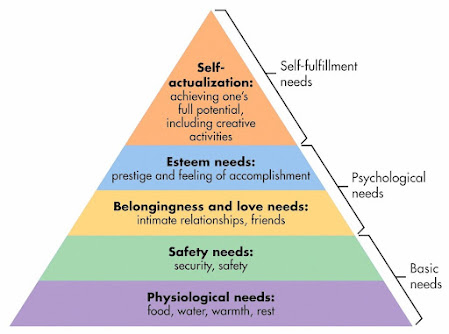
This theme was developed by existentialist philosophers of the mid twentieth century, perhaps reaching its culmination in the writings of the great humanist psychologist Abraham Maslow, best remembered for introducing a hierarchy of human needs and placing self-actualization at its pinnacle.


But he gradually became aware of an ultimate stage even beyond self-actualization, just prior to his untimely death in 1970 Maslow had increasingly become convinced that self-actualization is healthy self-realization on the path to self-transcendence. And psychological studies have since demonstrated that self-actualization does show a strong positive correlation with increased feelings of oneness with the world (Kaufman, 2018).

Young adults, especially students have long been prone to rebellious tendencies. A natural urge towards freedom drives young adults to cast off the social constraints imposed by prior generations in forms such as religion and strident demands of a consumer society in favour of developing one’s true self. But the road to freedom is not easy and after a few years of the highs and lows of turning on, tuning in, and dropping out, for example, many revert to more traditional world views.

What has been lacking is a reliable road map that might aid us in our journey towards freedom and self-actualization. Well, science may now have provided an answer, in the form of the variational free energy principle (FEP). In a nutshell the FEP, developed by renowned neuroscientist Karl Friston, states that all existence depends upon reducing the surprise or difference between an entities model for existence and its experience in achieving existence. This can be done in two fundamental ways, either make the model closer to reality or cause reality to follow the model more closely.

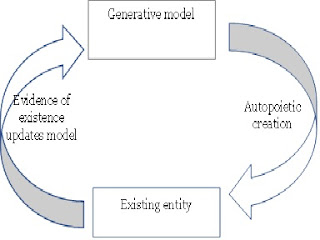
We may illustrate these two methods as a cyclical process where entities are created through the autopoietic process of carefully following the model and then the entity’s experience in achieving existence is used as evidence to update the model in a Bayesian manner.


For example, the model underlying biological existence might be the inherited genetic and epi-genetic model, autopoietic creation takes place as described by developmental biology, the existing entity is the resulting phenotype and the experience of the phenotype in achieving existence updates the model through natural selection. This describes an evolutionary process where knowledge for more resilient forms of existence is accumulated in the genetic model (Campbell 2022).

So, what could this have to do with self-actualization. Well, a self-actualized person is an existing entity whose evolution is described by this paradigm. Her model is her world view, including plans and expectations for her life - the self she strives to be. Her autopoietic self-creation occurs through faithful adherence to her model - she attempts to follow her life plans and these attempts result in an actual self that may conform to the plan in some areas and deviate from it in others. And this experienced actual self provides a test of her model or life plan that she may use to update and fine-tune it. Best of all this is an evolutionary process; over many cycles she continuously approaches the person she envisions in a process of self-actualization. 

One extremely important recent finding is that over time, evolving under the FEP, the model becomes ever closer to the world it is modelling (Fields et al, 2022). And applied to self-actualization this might imply the eventual realization of Maslow’s goal of self-transcendence – becoming one with the world. 

But wait a minute, how could an abstract scientific model lead to self transcendence? In part the answer might be that the FEP is moving from the realm of scientific abstraction to the realm of natural processes, one capable of typifying all other natural processes. If we were to align our self development with this process, we could begin the long journey of connecting to the world and cognitively merging with it.

References

Campbell, J. O. (2022). The Knowing Universe. KDP. Retrieved from https://www.amazon.com/Knowing-Universe-John-Campbell/dp/B09JJFF771/ref=sr_1_1?crid=MKS7ZHOB6X6Y&keywords=the+knowing+universe&qid=1643396653&sprefix=the+knowing+universe%2Caps%2C122&sr=8-1

Chris Fields, K. F. (2022). A free energy principle for generic quantum systems. ArXiv preprint. Retrieved from https://arxiv.org/pdf/2112.15242.pdf

Kaufman, S. B. (2018, November). What Does It Mean to Be Self-Actualized in the 21st Century? Scientific American. Retrieved from https://blogs.scientificamerican.com/beautiful-minds/what-does-it-mean-to-be-self-actualized-in-the-21st-century/